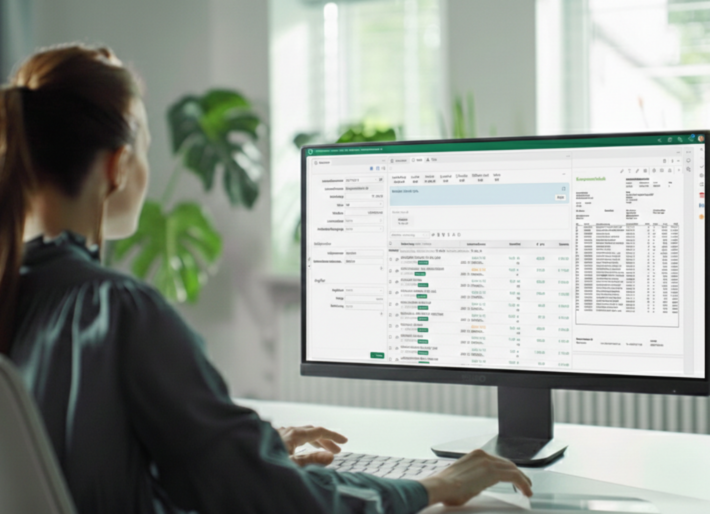
Selecting and implementing an EFH system
Avoid the most common pitfalls


Avoid the most common pitfalls
Investing in an EFM (electronic invoice management) system is one of the most effective ways to improve control, automation, and quality in the supplier invoice workflow. However, choosing a system—and especially implementing it—involves several steps where it’s easy to make mistakes.
After many years of experience with implementation projects, we see the same pitfalls recurring. Here you’ll find a clear and concrete overview of what often goes wrong, why it happens, and how to avoid it.
If processes are unclear, manual, and riddled with exceptions, technology alone will not create efficiency.

Review the process
Standardize wherever possible
Eliminate unnecessary steps
Let the system support a good process
A good EFH system should be:
Therefore, the system must be able to:
Improve the process before digitization
Choose a system that is both standardized and flexible
Ensure robust integrations
Prioritize user-friendliness
Work continuously on monitoring and improvement
Conrab Opto has extensive experience in implementing automated solutions that provide control and efficiency throughout the entire P2P process.
Please feel freeto contact us—we’ll help you choose the right system and ensure a smooth, future-proof implementation.

“Standard integration” does not mean the same thing for all providers.
Many solutions still require extensive work on the ERP side—even though they are called “ready-made integrations.”
The better the integration capabilities, the more value you’ll get from the entire automation chain.
Automation is all well and good, but not every invoice will be processed without human intervention.
This is where the systems differ significantly.
AI, automatic posting, and matching are important, but when something doesn’t works automatically, an intuitive and modern interface is absolutely crucial.
Many companies think:
“Once we’ve implemented the system—then we’re done.”
Unfortunately, that's when the work begins.
This is the foundation for the EFH system to deliver value over time.
Conrabs' case management system adapts to your workflows—whether you're handling 5 or 50 different types of cases.
Want to know more?
The most comprehensive system on the market
Want to know more?