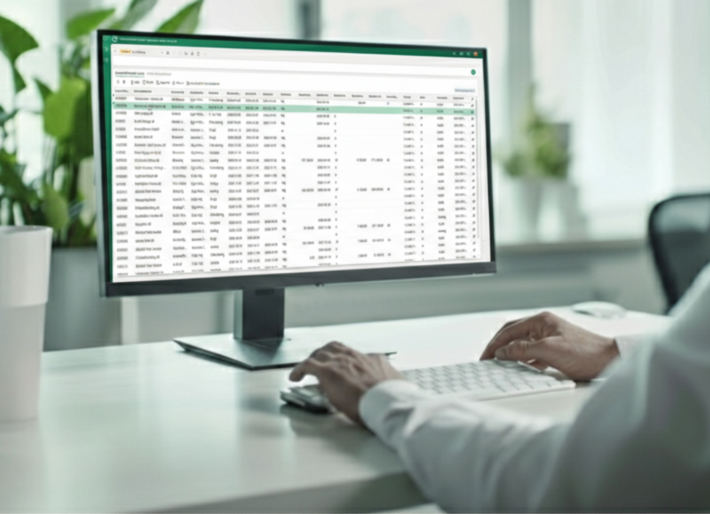
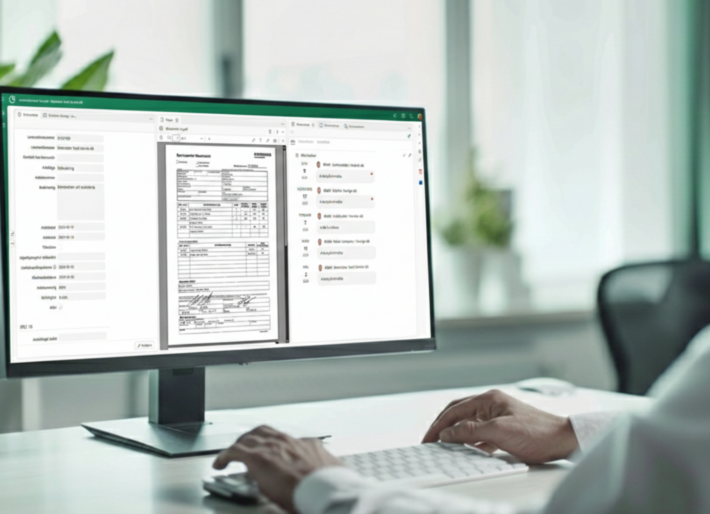
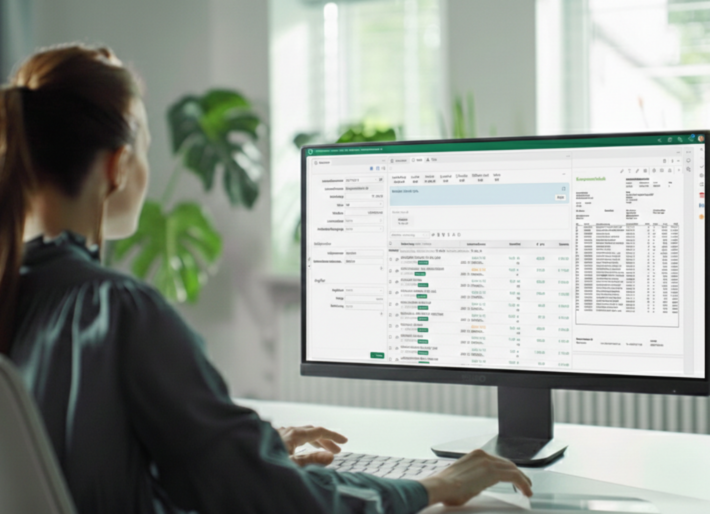
What is an invoice?
A simple and clear guide


A simple and clear guide
An invoice is one of the most basic documents a business uses, but also one of the most important. It serves as a request for payment, in which the seller lists what has been delivered and the amount the buyer is required to pay.
All companies deal with two types of invoices on a daily basis:
Customer invoices usually look similar because they are generated in business or financial systems. Supplier invoices, on the other hand, can come in all sorts of layouts and formats depending on how each supplier chooses to send them. This is one of the reasons why digital invoice processing has become so important.
In practice, there are three common invoice formats. They differ significantly in how they are handled and to what extent they can be automated.
The traditional method is to send invoices by mail.
This is still common in small businesses or markets with low levels of digitization.
Disadvantage: Always requires manual handling and is susceptible to errors or lost documents.
A digital file sent via email.
This is the most common format in the Nordic region today.
PDF is digital but unstructured. Therefore, it requires:
With the right system, PDFs can still be processed automatically, but never as smoothly as an e-invoice.
The most efficient and most automation-friendly format.
An e-invoice is sent in a structured format (usually XML) via a secure network, such as Peppol.
Advantages:
That is why e-invoicing has become the standard for companies that want to work smarter.
There are no formal layout requirements for paper and PDF invoices, but clarity is important:
For e-invoices, however, the format is strictly standardized (e.g., PEPPOL BIS).
It is precisely this standard format that makes e-invoices so effective in automated workflows.
An invoice is more than just a payment document; it is a central part of a company’s financial workflow. By:
…companies can reduce manual processing, improve data quality, and establish an efficient invoicing workflow.
Swedish and European law sets certain requirements for an invoice to be valid. The VAT Act and the Accounting Act specify what information must be included, regardless of whether the invoice is sent as a paper copy, a PDF, or an e-invoice.
A valid invoice must include:
Seller’s name and address, Buyer’s name and address, Invoice date, A unique invoice number, Seller’s VAT registration number, Description of goods/services, Delivery date, Total amount including VAT, VAT amount and applicable VAT rate, Any discounts, Payment terms and due date, The word “self-billing” if the buyer issues the invoice to the seller.
This applies to all invoices—regardless of format.
Conrabs' case management system adapts to your workflows—whether you're handling 5 or 50 different types of cases.
Want to know more?
The most comprehensive system on the market
Want to know more?