Invoice matching
What is it, and why is it so important?


What is it, and why is it so important?
The goal is to ensure that the purchase order, delivery, and supplier invoice match before payment is made.
This means that the company only pays for what has actually been ordered and delivered—and at the right price.
Manual invoice matching can quickly become both complicated and time-consuming, especially when an invoice relates to multiple purchase orders from different parts of the organization. That’s why automation has become the standard for companies that want to gain control, reduce errors, and free up time.
With modern EFH systems, matching can be done entirely automatically, so that invoices pass through the process touchlessly, without any manual intervention.
At its core, invoice matching involves validating three things:
When these match, the invoice can be paid immediately.
When they do not match, a discrepancy is created for further processing.
Automation ensures that the majority of invoices are processed automatically, while the system flags only those that require manual review.
The system ensures that the items billed match the items ordered.
The most common and safest option.
The system checks that:
Minimizes the risk of incorrect payments
Ideal for inventory management and regular purchases
Here, another step is added to the matching process, for example:
Use only when the process requires additional security or documentation.
For companies looking to streamline their supplier processes, invoice matching is a key component.
When done correctly, invoice matching provides:
That is why it is important to choose a system that not only handles matching—but can automate as much as possible.


Handles invoices in all formats
Automatic interpretation at the sentence and line level
Automatic matching at the header and line level (purchase order matching)
Automatic registration, account distribution and certification
Advanced flow control
Automatic reminders and escalations
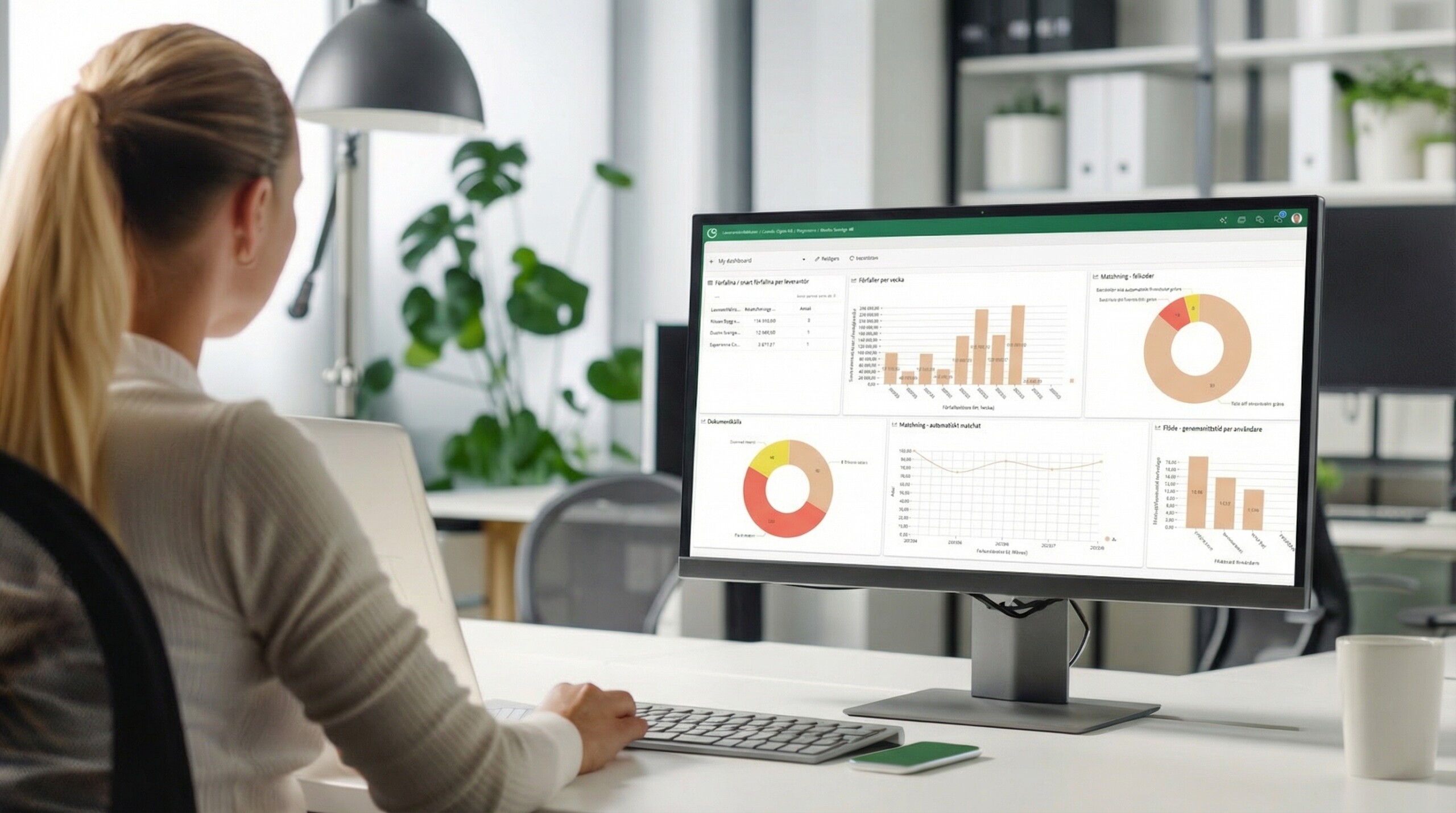
Reports & Statistics
Credit Monitoring & System Notifications
Supplier ratings and supplier profiles
Contact us and we’ll show you how to take full control.
To ensure that the company only pays for what has actually been ordered, delivered, and invoiced correctly. This reduces errors, duplicate payments, and unnecessary manual work.
Manual matching takes time and carries a risk of errors. Automated matching allows the system to automatically compare orders, deliveries, and invoices—faster, more reliably, and with significantly less manual effort.
Yes. Modern systems can handle invoices with many line items, multiple purchase orders, and varying delivery dates. The system automatically identifies the corresponding entries, even in complex cases.
The system generates an exception and sends it to the appropriate person. The user can immediately see what is wrong—price, quantity, delivery, or something else—and can quickly resolve the issue.
To achieve faster workflows, fewer errors, less manual work, and better control. A high degree of automation makes invoice processing more cost-effective and scalable.
Conrabs' case management system adapts to your workflows—whether you're handling 5 or 50 different types of cases.
Want to know more?
The most comprehensive system on the market
Want to know more?